
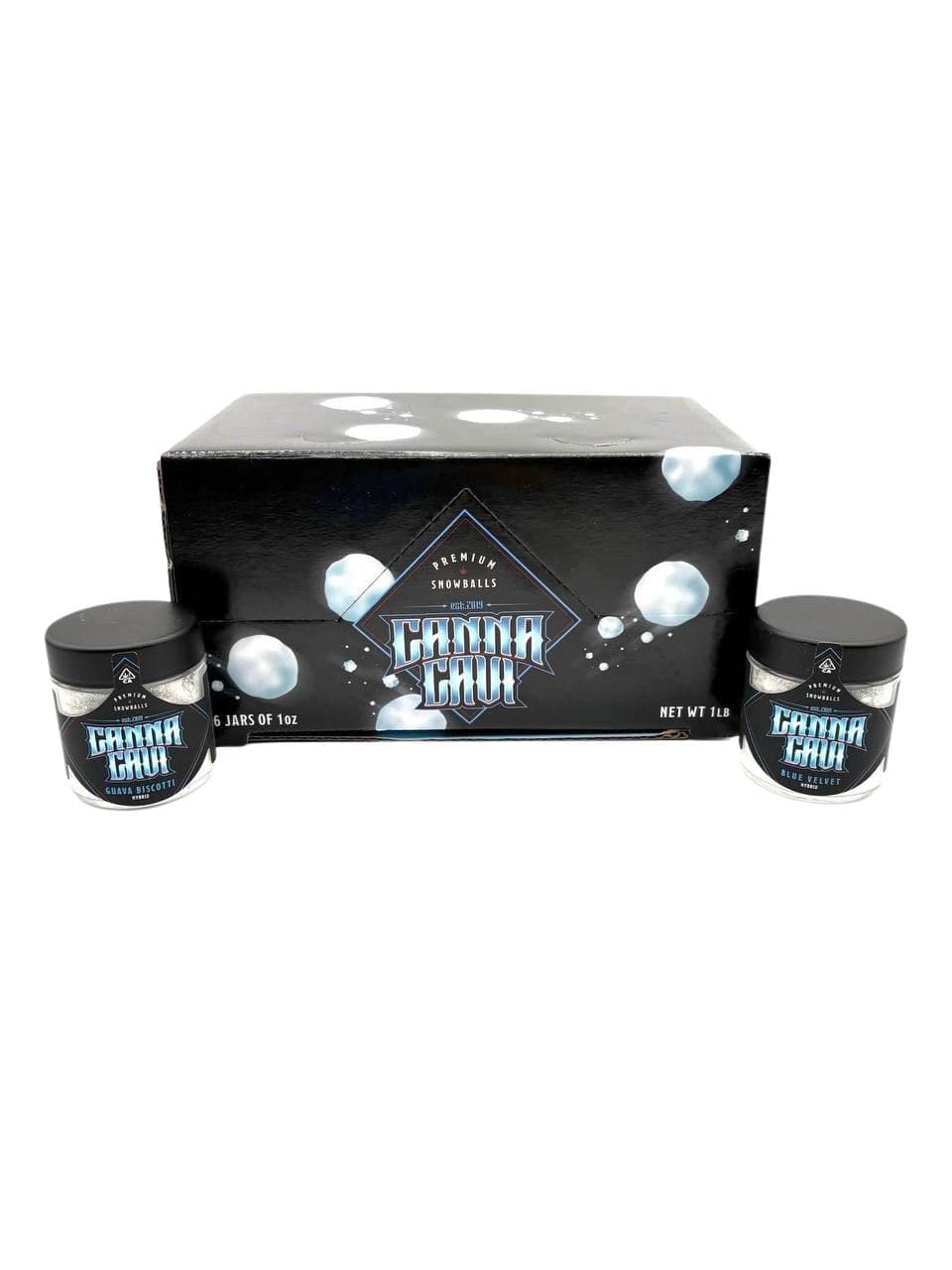

Canna Cavi Snowballs – The Science, Craft, and Innovation Behind Advanced Cannabis Infusion
Introduction to Canna Cavi Snowballs: A Scientific Perspective
The modern cannabis industry has entered a phase where craftsmanship meets chemistry, and Canna Cavi Snowballs symbolize that intersection. Rather than being viewed simply as a product, they represent a study in applied cannabinoid science—how controlled extraction, precision infusion, and terpene preservation techniques combine to create an ultra-refined botanical formulation.
At its core, the Canna Cavi Snowball concept illustrates the progress of infused cannabis innovation, where researchers and manufacturers explore how cannabinoids and terpenes interact at a molecular level. The result is a flower or substrate coated with concentrated extracts—often crystalline in appearance—that has been engineered to express uniform potency, stable flavor chemistry, and predictable physical properties.
Understanding Canna Cavi Snowballs from an educational standpoint requires unpacking the disciplines of plant chemistry, materials science, and process engineering. Each element—extraction, distillation, infusion, and testing—demonstrates how modern cannabis laboratories translate natural plant compounds into measurable, repeatable formulations.
The Evolution of Infused Cannabis Products
The emergence of Canna Cavi Snowballs fits into a broader timeline of cannabis-infusion technology. Early methods of infusion relied on manual coating with hash oils or kief, creating irregular potency and uneven distribution. As regulatory frameworks demanded higher standards, laboratories adopted closed-loop extraction systems, vacuum ovens, and cryogenic processing to ensure safety and reproducibility.
By the late 2010s, the market saw the introduction of diamond-infused and terpene-enriched products—innovations that sought to merge purity with sensory experience. Snowballs advanced that idea by focusing on surface chemistry: infusing a dried botanical core with high-purity extracts that crystallize under controlled temperature and pressure. This process resembles pharmaceutical coating techniques, where consistency and purity are paramount.
From a scientific standpoint, Canna Cavi Snowballs illustrate the culmination of:
Solvent-based extraction precision (for isolating cannabinoids)
Solvent-less refinement (for terpene retention)
Particle engineering (for creating crystalline or “snowball” textures)
Each stage reflects how the cannabis sector has embraced lab-grade process control, making infusion both art and science.
Understanding Cannabinoid and Terpene Chemistry
Cannabinoids: Active Plant Molecules
Cannabinoids are lipophilic compounds synthesized in the trichomes of Cannabis sativa L.. In scientific contexts, their activity is studied through interactions with the endocannabinoid system (ECS)—a network of CB₁ and CB₂ receptors responsible for modulating physiological balance. Common cannabinoids include Δ9-tetrahydrocannabinol (THC), cannabidiol (CBD), and minor constituents such as CBG, CBC, and CBN.
Canna Cavi Snowballs serve as a teaching model for how cannabinoids can be stabilized and preserved through micro-encapsulation and crystallization. The crystalline coating protects fragile compounds from oxidation, extending shelf stability and maintaining consistent laboratory measurements over time.
Terpenes: Aromatic Synergy
Terpenes are volatile organic hydrocarbons that give cannabis its characteristic aroma and contribute to the entourage effect—the hypothesized synergy between cannabinoids and aromatic compounds. Compounds such as myrcene, limonene, pinene, and linalool influence flavor profiles and vaporization temperatures.
From a formulation perspective, Canna Cavi Snowballs demonstrate how terpene retention can be optimized by:
Performing low-temperature extraction (below 100 °C) to minimize volatilization.
Employing inert gas environments (e.g., nitrogen blanketing) during curing.
Using analytical tools such as gas chromatography–mass spectrometry (GC-MS) for terpene quantification.
These approaches highlight the precision of terpene management in modern cannabis research.
Extraction Technology: From Plant to Concentrate
The foundation of any infused formulation lies in extraction efficiency. Researchers employ several controlled methods depending on the desired compound profile:
Supercritical CO₂ Extraction: Offers tunable polarity, producing clean extracts with minimal solvent residue.
Hydrocarbon Extraction (Butane/Propane): Captures a wider terpene spectrum but requires rigorous purging and compliance testing.
Ethanol Extraction: Balances yield and safety, suitable for full-spectrum distillates used in infusion.
Once the extract is collected, it undergoes winterization (to remove lipids) and distillation (to concentrate cannabinoids). These refined distillates are then used to coat or infuse plant substrates—forming the base of a Canna Cavi Snowball.
Infusion and Crystallization: The “Snowball” Effect
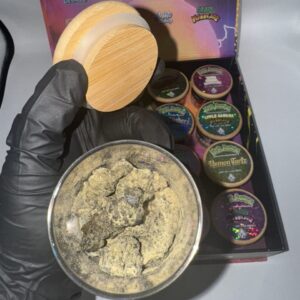
The hallmark feature of Canna Cavi Snowballs is their crystalline coating. Scientifically, this involves controlled nucleation and crystal growth—processes familiar in chemistry and materials engineering. When concentrated extracts are cooled and subjected to precise agitation, cannabinoid crystals form on the surface of the host material.
This phenomenon is analogous to seeded crystallization in pharmaceutical manufacturing. The parameters that influence crystal morphology include:
Solvent saturation
Temperature gradient
Agitation speed
Solute concentration
By adjusting these factors, manufacturers can achieve a uniform, snow-like coating—hence the name Snowballs. The outcome is not only aesthetic but functional: crystalline structures improve heat resistance and dosage uniformity during subsequent use or testing.
Quality-Control and Analytical Testing
Educational discussion of Canna Cavi Snowballs would be incomplete without addressing laboratory verification. Modern cannabis products undergo multistage testing to meet regulatory standards for safety and consistency. Analytical procedures typically include:
High-Performance Liquid Chromatography (HPLC): Determines cannabinoid potency.
Gas Chromatography (GC-FID / GC-MS): Quantifies terpene profiles and detects residual solvents.
Inductively Coupled Plasma Mass Spectrometry (ICP-MS): Screens for heavy metals.
Microbial and Mycotoxin Testing: Ensures absence of pathogens or molds.
Canna Cavi Snowballs exemplify how comprehensive testing supports transparency and scientific integrity. Data generated from these analyses feed back into process optimization, creating a closed loop of continuous improvement.
Sustainability and Material Science
A growing focus in cannabis research is eco-efficiency—minimizing environmental impact while maintaining precision. Canna Cavi Snowballs highlight opportunities for sustainable innovation, such as:
Using renewable CO₂ in extraction systems.
Recovering and recycling solvents.
Selecting biodegradable or recyclable packaging materials.
Implementing energy-efficient crystallization through temperature-controlled automation.
From a materials-science perspective, the “snowball” structure itself demonstrates how surface area and coating uniformity can be optimized to reduce waste. This mirrors trends across the broader field of green chemistry.
Conclusion on Canna Cavi Snowballs
Canna Cavi Snowballs serve as a case study in applied cannabis science, demonstrating the convergence of chemistry, engineering, and quality assurance. They illustrate how rigorous laboratory methods, controlled crystallization, and sustainable manufacturing define the modern standard for infused botanical research.
This educational exploration of extraction, terpene preservation, and infusion lays the groundwork for deeper discussion in the next sections—where we’ll examine process validation, packaging technology, regulatory compliance, and future research directions.
| quantities | 1 JAR, 16 JARS, 4 JARS, 8 JARS |
|---|
Be the first to review “CANNA CAVI SNOWBALLS”
Related products







Reviews
There are no reviews yet.